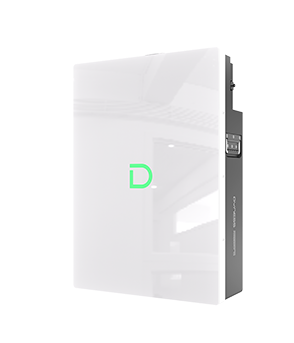
Behind every successful battery energy storage system lies a component often taken for granted: the lithium battery cells and packs that actually store the energy. As project developers and integrators scale up BESS installations—from behind-the-meter commercial sites to grid-front applications—the choice of energy storage lithium battery products directly determines system safety, lifespan, and return on investment. Without reliable lithium batteries, even the most sophisticated inverters and energy management software cannot deliver consistent performance. Dyness, a specialist in the R&D, production, and sales of energy storage systems, demonstrates this principle through products like the PowerDepot G2—a low-voltage solution originally designed for residential use but highly relevant for smaller-scale BESS deployments requiring robust, safe, and expandable lithium storage.
Safety and Fire Suppression: Non-Negotiable for Integrated Deployments
Modern BESS integration places lithium battery packs in close proximity to inverters, switchgear, and sometimes occupied buildings. Thermal runaway in a single cell can cascade into a system-wide failure. High-quality energy storage lithium battery products therefore embed passive and active safety features. The PowerDepot G2 includes a built-in aerosol fire extinguisher that eliminates fire risks and ensures the safety of electricity in residential settings—a feature equally valuable for small commercial BESS units installed near people or sensitive equipment. Integrators cannot afford to overlook such protections when specifying battery hardware.
Scalability and Environmental Flexibility for Diverse Sites
No two BESS projects have identical energy requirements. A remote telecom tower needs a compact, weatherproof battery; a community microgrid requires expandable capacity. The PowerDepot G2 supports up to 50 parallel units with a capacity range from 5.12kWh to 256kWh. It also has a high IP66 protection rating and supports indoor and outdoor installation. This means integrators can deploy the same energy storage lithium battery products across multiple project types—outdoor ground mounts, indoor electrical rooms, or humid coastal environments—without redesigning enclosures or worrying about ingress protection.
Cycle Life and Long-Term Degradation Impact Project Economics
For any BESS deployment, the battery’s calendar life and cycle life dominate levelized cost of storage calculations. Premature capacity fade erodes revenue from arbitrage or peak shaving within five years, breaking the financial model. Dyness engineers its lithium battery products with cell chemistries and thermal management designed for daily cycling. Combined with modular scalability, this allows project owners to replace or augment battery sections rather than entire banks, extending useful system life and improving internal rates of return.
Final Assessment: Lithium Batteries Are the Foundation, Not an Accessory
Modern BESS deployment and integration rise or fall on the quality of energy storage lithium battery products. Safety, scalability, environmental durability, and cycle life are not optional features—they are core requirements that every integrator must verify before breaking ground. With proven solutions like the PowerDepot G2—offering built-in fire protection, IP66-rated enclosures, and parallel expansion up to 256kWh—Dyness provides the lithium foundation upon which reliable, bankable energy storage systems are built. Choose the battery first; the rest of the system will follow.