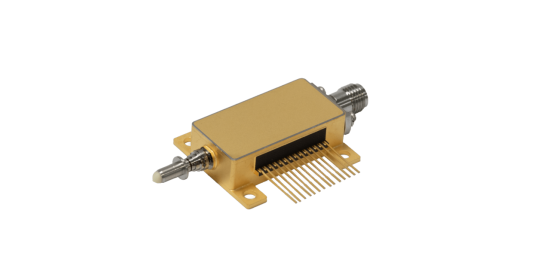
Thin film lithium niobate has emerged as a strong material platform for integrated photonics. For high-speed communication systems, TFLN devices provide strong optical performance along with stable and scalable operation. The material itself offers a wide transparency window and strong electro-optic response, making it suitable for precise signal control across multiple wavelengths.
At Liobate, TFLN devices are developed to support applications such as data centers, communication networks, and testing instruments. These solutions focus on enabling consistent performance while reducing energy consumption and device footprint.
IQ Modulator Integration on TFLN Platforms
An IQ modulator is essential for encoding both amplitude and phase information in optical signals, which is critical for coherent communication systems. Traditional lithium niobate modulators often face limitations in size, bandwidth, and power efficiency.
TFLN-based designs address these challenges by enabling compact architectures with lower driving voltage and higher bandwidth. For example, integrated TFLN IQ modulators can support advanced modulation formats such as QPSK and QAM while maintaining strong signal fidelity and reduced insertion loss.
Additionally, recent research highlights that TFLN IQ modulators can achieve GHz-level bandwidth with CMOS-compatible voltage levels, supporting both high-speed transmission and system integration. This makes them suitable for next-generation optical networks where both performance and scalability are required.
Key Performance Differentiators of TFLN Optical Modulator Platforms
Several factors distinguish TFLN platforms in the development of optical modulators:
First, bandwidth capability is a defining advantage. Modern TFLN modulators have demonstrated bandwidths exceeding tens of gigahertz and even approaching 100 GHz in advanced designs, enabling high data rate transmission.
Second, power efficiency plays a central role. Lower half-wave voltage allows TFLN devices to operate with reduced electrical input, which supports energy-sensitive applications such as large-scale data infrastructure.
Third, compact integration is increasingly important. Compared to traditional bulk devices, TFLN enables smaller footprints while maintaining performance, making it easier to integrate into photonic circuits and transceiver modules.
Finally, signal quality remains consistent due to low optical loss and stable electro-optic properties, ensuring reliable operation in demanding environments.
Conclusion
TFLN devices are increasingly used in optical communication systems due to their bandwidth performance, optical efficiency, and integration flexibility. In IQ modulator applications, these characteristics help support more precise signal transmission and stable system operation. With ongoing development from companies like Liobate, TFLN technology is becoming a practical foundation for scalable and efficient photonic platforms.