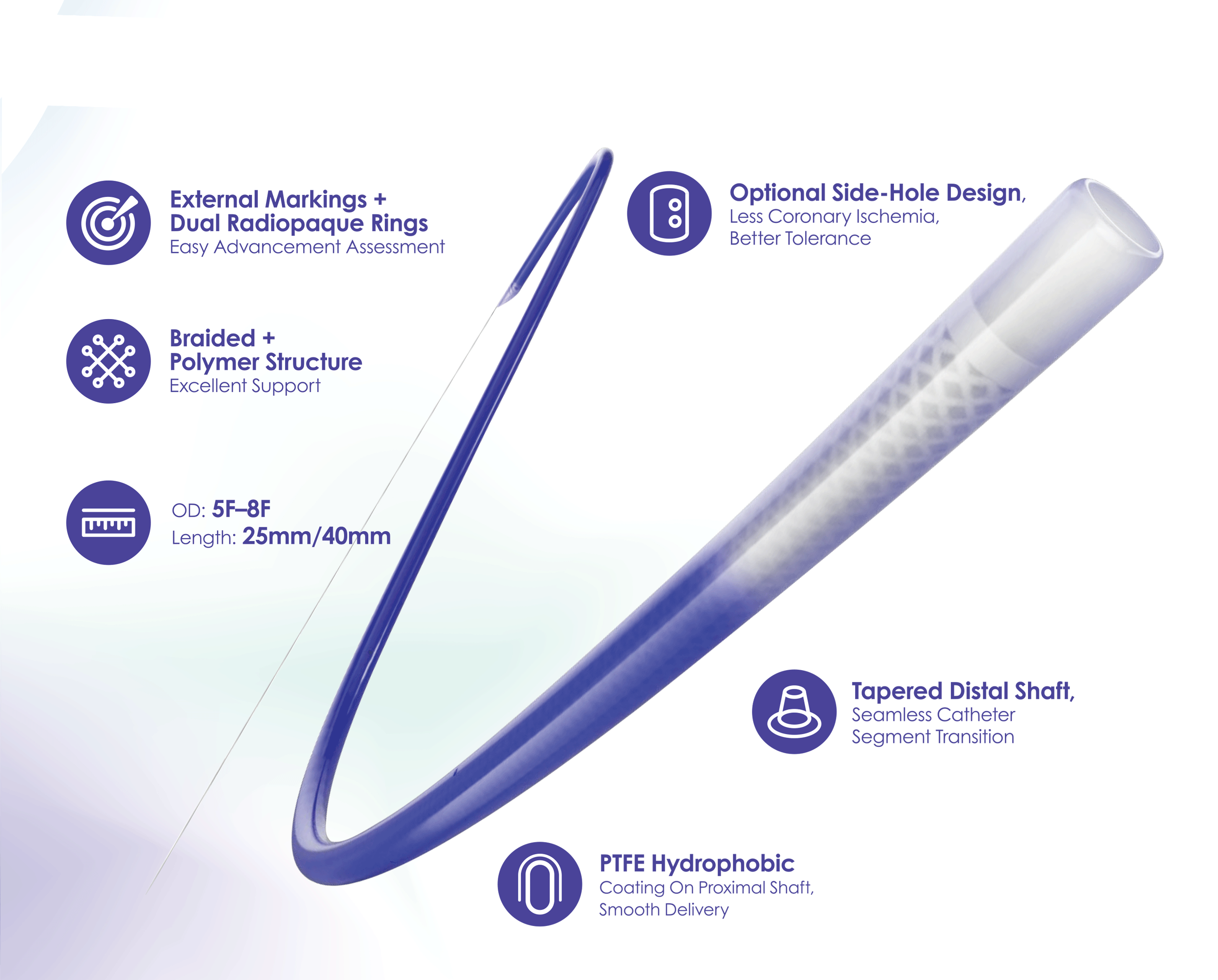
Complex PCI can become challenging when balloons, stents, or other interventional devices are difficult to advance through tortuous, calcified, or angulated coronary anatomy. A guide extension catheter can provide additional backup support and improve the alignment between the guiding catheter and the target vessel, but its use also introduces device-specific considerations that procurement teams and medical-device distributors should understand.
When evaluating a guide extension catheter, procurement teams must look beyond basic reach extension. Analyzing structural design, vessel compatibility, deep-engagement considerations, and deliverability can help procurement teams assess whether the device is appropriate for the intended PCI workflow. Reviewing comprehensive technical performance data allows buyers to optimize device selection before finalizing institutional purchasing programs.
Why Guide Extension Catheters Are Used in Complex PCI
A guide extension catheter is generally used to create additional support closer to the target lesion. By advancing the extension within the coronary artery, the system can provide a more stable pathway for the delivery of balloons, stents, and other interventional devices.
This can be particularly relevant when conventional guide-catheter backup is insufficient. Severe vessel tortuosity, calcification, long lesions, and difficult device-delivery pathways are among the situations discussed in the literature where guide extension systems may provide additional support.
However, greater support does not mean that deeper positioning is automatically preferable. The extension catheter interacts directly with the vessel and with other devices being delivered through it. Procurement teams should therefore consider both the intended benefit and the potential failure modes associated with the device.
Vessel Injury and Deep-Engagement Considerations
One important risk category is vessel injury. Literature reviewing guide extension technology describes coronary dissection as a potential complication, particularly when the device is advanced forcefully or when its tip interacts with diseased vessel segments.
Deep engagement can also create pressure damping or partial obstruction of blood flow. A recent review identifies vessel injury, thrombosis, air embolism, and hemodynamic instability among potential complications associated with guide extension catheter use.
For buyers, these considerations highlight why the catheter’s distal design and flexibility should be documented clearly. A supplier should provide information that helps professional users understand the intended application, vessel-size limitations, and operating conditions rather than describing the device only through general terms such as “strong support.”
Device Compatibility and Delivery Risks
Another area that deserves attention is compatibility between the guide extension catheter and the interventional devices being delivered through it. Balloons and stents must pass through the extension without damaging the device or becoming caught at the catheter’s distal or proximal transition points.
Regulatory and post-market surveillance information also shows why compatibility, handling limitations, and device integrity should be considered during supplier evaluation. Such reports describe reported events rather than establishing complication rates for a specific product. These reports describe adverse-event reporting patterns rather than establishing comparative complication rates between products.
This is why procurement teams should request detailed compatibility information before purchasing. Relevant specifications may include the compatible guide-catheter size, internal diameter, target-vessel diameter, guidewire compatibility, device compatibility, effective length, and applicable pressure or handling limitations.
What Should Buyers Ask Guiding Extension Catheter Suppliers?
When comparing guiding extension catheter options, procurement teams should request more than a product brochure. A practical supplier evaluation can cover four areas.
First, Buyers should verify the applicable vessel-size limitations in the current product documentation.
Second, examine the catheter’s physical design. Buyers can ask about distal-tip construction, flexibility, shaft structure, inner lumen, radiopacity, and the characteristics intended to support tracking and device delivery.
Third, verify compatibility. The supplier should clearly identify which guiding-catheter systems and interventional devices are compatible with the extension catheter.
Fourth, confirm the regulatory and documentation package required for the target market. This may include product specifications, labeling, instructions for use, certificates, registration information, and packaging details.
Why Technical Documentation Matters
Guide extension catheters can serve several functions beyond simply increasing catheter reach. Published literature describes applications including additional backup support, coaxial alignment, deep engagement, device delivery, selective contrast injection, and support for complex PCI techniques.
Because the device can interact with multiple components during a procedure, incomplete technical information can make procurement and compatibility assessment more difficult. A clear specification sheet allows hospitals and distributors to compare products using objective parameters instead of relying on broad performance claims.
Shunmei currently lists its Guide Extension Catheter within its Coronary Intervention portfolio, alongside coronary microcatheters, balloon dilatation catheters, guidewires, guiding catheters, drug-coated balloons, and other interventional products.
Building a More Careful Supplier Evaluation
Supplier evaluation should not focus solely on a guide extension catheter’s ability to provide additional support. Instead, procurement teams can assess how the device balances support, flexibility, deliverability, compatibility, vessel-size requirements, and documented limitations.
When reviewing Shunmei as a potential supplier, buyers can examine the Guide Extension Catheter product information and request the latest technical specifications, compatibility details, regulatory documentation, and market-specific information directly from the manufacturer. This provides a more practical basis for supplier evaluation while keeping product selection aligned with documented device characteristics and procedural requirements.