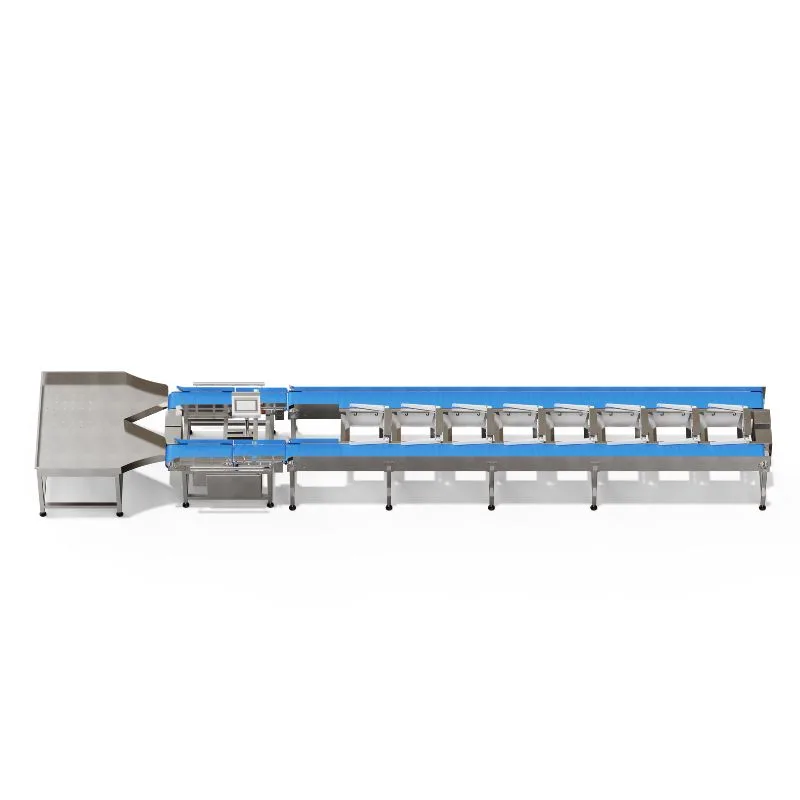
Selecting equipment for seafood processing requires balancing extreme physical durability with delicate product handling. Unlike dry food manufacturing, the seafood environment involves salt, moisture, and temperature fluctuations that test the limits of industrial hardware.
Procurement teams must look beyond basic speed metrics to identify systems that ensure long-term regulatory compliance and operational efficiency. Choosing a high-quality fish sorting machine requires a methodical evaluation of several key technical and structural variables.
Defining Throughput and Product Versatility
Processing facilities rarely handle a single fish size or species throughout the entire operating year. Seasonal availability forces production lines to accommodate everything from small shellfish to large fillets or whole fish.
A versatile system must feature rapid adjustment capabilities to handle diverse shapes and weights without requiring extensive manual tooling changes between batches.
Scalability is the first operational pillar for growing plants. Managers should calculate peak throughput needs during seasonal runs rather than sizing equipment solely for average daily loads.
Bottlenecks often appear at the grading stage when manual labor or underpowered conveyors limit the pace of the entire facility. Selecting an ideal fish sorting machine requires verifying that the belt width and speed ranges align with your maximum capacity projections.
Consistent product singulation prevents throughput loss. Advanced conveyor designs incorporate synchronized belt speeds and intelligent spacing mechanisms to ensure items do not overlap before reaching the sensing zone.
A lack of proper singulation leads to inaccurate sensor readings and significant product rejects. Always prioritize systems that offer modular infeed configurations tailored to your specific product profile.
As an experienced manufacturer, Easyweigh supports both standard equipment and custom OEM / ODM services, to adapt sorting solutions for unique production line layouts and special product-grading requirements.
Navigating Harsh Environmental Demands
Corrosion is the single greatest threat to equipment longevity in a seafood environment. Saltwater spray and aggressive cleaning agents destroy standard industrial components in weeks. Purchasing decisions must hinge on material science, focusing on high-grade stainless steel that resists pitting and chemical erosion.
Standards like IP69K are not suggestions; they are mandatory requirements for the washdown cycles common in the industry. These ratings ensure that sensitive electronic components and load cells remain sealed against high-pressure water jets and heavy cleaning compounds. Easyweigh constructs equipment with fully sealed, high-grade 316 stainless steel frames to withstand these punishing sanitation routines daily.
Hygienic design principles extend to the small details often overlooked during procurement. Smooth, crevice-free surfaces prevent the accumulation of organic matter, scales, and bacteria. Every bolt, weld, and junction must promote easy drainage to ensure the machinery dries quickly after sanitation. Investing in robust, sanitary hardware protects your plant from audit failures and extends the total service life of your capital equipment.
Achieving Precision in Weight Sorting
Grading accuracy dictates the bottom line in high-value seafood processing. Every gram of product lost to improper weight deviation or giveaway directly impacts profit margins. The core of effective Weight Sorting lies in the responsiveness of the load cells and the filtering algorithms that eliminate environmental vibration noise.
Seafood often requires sorting based on weight class or individual unit identification for traceability. High-precision load cells should provide stable readings even when the product is moving at high conveyor speeds. Look for systems that integrate dynamic weighing technology, which compensates for belt tension and environmental vibrations in real-time.
Advanced software algorithms play a critical role in distinguishing true product weight from external interferences. Sophisticated systems calculate running averages and adjust for tare variations automatically between items. This ensures that every classification decision remains consistent regardless of production speed or the size of the seafood items being processed.
Integrating Advanced Data and Connectivity
Modern processing facilities operate on data-driven decision-making. A modern fish sorting machine must function as an integrated node within your existing factory network rather than as an isolated workstation. Real-time access to production statistics allows plant managers to monitor yields, rejection rates, and throughput in real-time.
Connectivity capabilities should include standard communication protocols that link with PLC systems and enterprise resource planning software. Such integration enables automated data collection for batch reports and traceability logs, which are vital for meeting stringent food safety standards. Systems from Easyweigh offer intuitive interfaces that simplify the data export process for management analysis.
Beyond basic reporting, the ability to remote-monitor machine health prevents unplanned downtime. Diagnostics software can highlight sensor drifts or motor warnings before they result in a critical failure. By leveraging these digital insights, maintenance teams can shift from reactive repairs to a predictive maintenance schedule, significantly increasing overall equipment effectiveness.
Long-Term Reliability and Technical Support
Equipment is only as valuable as the support network backing it. Global supply chains can suffer from delays, and specialized parts are not always available through local hardware suppliers. Ensure the manufacturer offers comprehensive technical training for your internal staff and maintains a robust inventory of spare components.
Maintaining a fish sorting machine effectively relies on the quality of the technical documentation and the availability of responsive remote support. Troubleshooting guides should be clear, and software interfaces must be user-friendly enough to allow operators to perform minor adjustments without external assistance. Quick access to expert support can be the difference between an hour of downtime and a full-shift stoppage.
The true value of any installation is measured by its return on investment over its entire operational lifecycle. Teams at Easyweigh provide extensive application guidance and post-installation support to ensure systems perform optimally in diverse environments.
Carefully vet potential partners by examining their track record in the seafood sector and their commitment to long-term reliability. To maximize profitability, prioritize vendors who offer deep expertise in Weight Sorting alongside durable, hygienic hardware that meets your specific operational challenges.