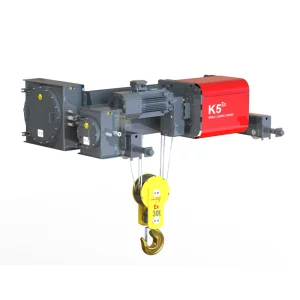
Efficient material handling depends on matching lifting equipment to the actual workflow of a workstation. When operators repeatedly move components, tools, assemblies, or finished products, manual handling can increase physical strain and slow production. A properly selected jib crane provides a practical solution by bringing lifting capability directly to the point of use.
For heavier loads, longer lifting distances, or higher operating frequencies, a wire rope hoist can provide the lifting performance required for demanding applications. The key is not simply choosing a crane with sufficient capacity. The workstation layout, load characteristics, lifting frequency, available headroom, and required working range should all be considered before selecting equipment.
Start With the Actual Lifting Requirements
The first step is to examine what the workstation needs to lift and how frequently those loads are moved. Record the typical load weight, maximum load weight, lifting height, horizontal travel distance, and number of lifting cycles during a normal shift.
A workstation that handles small components occasionally may not require the same equipment as a production station that lifts heavy assemblies throughout the day. Frequent lifting operations require equipment with an appropriate duty classification and motor configuration to maintain consistent performance.
For applications involving substantial loads or frequent vertical lifting, an electric wire rope hoist can offer greater capacity and lifting height than many light-duty alternatives. WORLDHOISTS wire rope hoists cover lifting capacities from 0.8 to 80 tons and lifting heights up to 90 meters, with duty classes from M4 to M6 depending on configuration.
Evaluate Available Space and Headroom
Space limitations often determine whether a lifting system is practical. Before installation, measure the available ceiling height, structural clearance, aisle width, and distance between the lifting point and surrounding equipment.
Low-headroom equipment can be particularly useful when a workstation has limited vertical space. A compact hoist configuration can help preserve usable lifting height without requiring major changes to the building structure.
For a jib crane for production facility applications, the mounting location also matters. The crane should provide sufficient coverage while avoiding interference with machinery, storage racks, doors, and operator access. A carefully positioned system can create a defined lifting zone without unnecessarily occupying valuable floor space.
Consider the Workstation’s Movement Pattern
The required working range should correspond to how materials actually move through the workstation. If loads are transferred between a machine and a nearby staging area, a rotating jib crane may provide an efficient solution. If the lifting point needs to cover a specific production area, the jib crane’s boom length and rotation range should be evaluated accordingly.
A workstation jib crane is particularly suitable when lifting is concentrated around one operator or one processing station. Instead of moving materials manually between locations, the crane can position loads closer to the required working point.
For facilities where floor space is limited, a wall-mounted jib crane can use an existing wall or structural column as its mounting point. This configuration can keep more floor area available for production activities while providing localized lifting coverage.
Match Hoist Capacity to Real Operating Conditions
Rated capacity should not be the only consideration when selecting lifting equipment. The equipment must also account for how loads are handled during actual operation.
Consider the heaviest load, load distribution, lifting speed, positioning requirements, and frequency of use. Selecting equipment solely according to an average load can create problems if occasional heavier loads exceed the intended operating range.
A wire rope hoist can be considered when the workstation requires higher lifting capacity, greater lifting height, or more frequent operation. WORLDHOISTS models use high-strength galvanized wire rope, electromagnetic disk brakes, hardened gear reducers, and protection systems for conditions such as overload and overheating.
Precise movement may also be important when positioning components or assemblies. Variable-speed or stepless trolley configurations can help operators move loads more smoothly and control positioning during material transfer.
Assess Safety and Maintenance Requirements
A lifting system should support safe operation throughout its service life. Before choosing equipment, consider overload protection, braking performance, rope guidance, hook design, and access for inspection and maintenance.
The surrounding workstation should also be reviewed. Operators need adequate visibility of the load and sufficient clearance around the lifting path. The crane should not create new obstacles that interfere with normal production activities.
Maintenance requirements are another important consideration. Equipment with accessible components and appropriate protection can simplify routine inspections and reduce unnecessary interruptions. WORLDHOISTS wire rope hoists incorporate features such as rope guides, drop stops, overload protection, and overheat protection to support reliable operation.
Build a Lifting Solution Around the Workstation
Choosing lifting equipment becomes easier when the decision begins with the workstation rather than the equipment catalog. Identify the loads, movement patterns, operating frequency, available space, and safety requirements first. Then determine whether a jib crane, workstation jib crane, wall-mounted jib crane, or another crane configuration provides the appropriate coverage.
When heavier loads or demanding lifting cycles are involved, a correctly specified wire rope hoist can provide the capacity, lifting height, and operating features needed for the application. By matching the equipment to real working conditions, facilities can improve material flow while making better use of available production space.
With its range of wire rope hoists and lifting equipment, WORLDHOISTS can support projects that require practical equipment selection, technical guidance, and configurations suited to different operating environments.