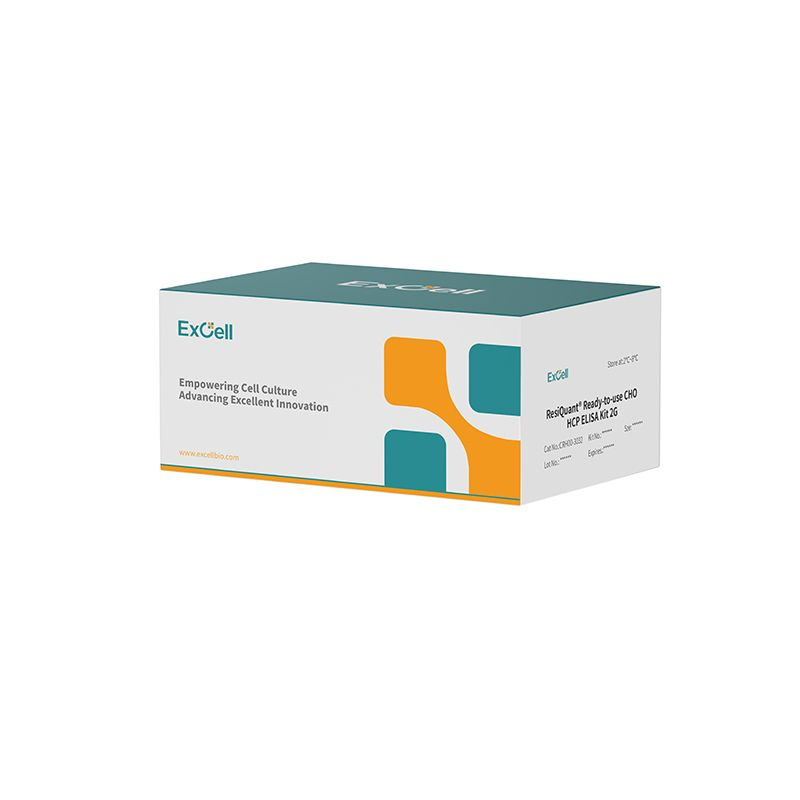
The global biopharmaceutical landscape is shifting toward increasingly niche targets and highly specific biomarkers. For many B2B organizations—ranging from contract research organizations (CROs) to diagnostic developers—standard off-the-shelf assays often fall short of the required precision or species specificity. This is where custom ELISA kit production becomes a critical strategic asset for maintaining a competitive edge in drug development and clinical diagnostics.
However, outsourcing such a sensitive process requires more than just a vendor; it requires a partner capable of sophisticated analytical method development. Choosing the wrong partner can lead to stalled clinical trials, wasted samples, or inconsistent diagnostic results. To ensure your project’s success, you must evaluate potential partners based on four technical pillars: sensitivity, species coverage, matrix compatibility, and lot-to-lot consistency.
1. Defining Sensitivity and Detection Limits
In B2B reagent procurement, the sensitivity of an assay is often the primary differentiator between a research-grade tool and a clinical-grade diagnostic. When engaging in custom ELISA kit production, it is imperative to ask a potential partner how they define and validate their Lower Limit of Quantitation (LLOQ) and Limit of Detection (LOD). High sensitivity ensures that biomarkers can be detected at the earliest stages of a disease or during the initial phases of drug metabolism, which is a core technical focus for ExCell Bio.
A high-quality partner utilizes advanced antibody screening and optimization protocols to ensure that even low-abundance proteins are detected with high signal-to-noise ratios. During the initial analytical method development phase, the partner should provide data demonstrating that the assay can distinguish the target analyte from background noise in complex biological environments. This level of technical transparency is what separates professional-grade services from generic manufacturing, providing the data integrity required for regulatory submissions.
2. Species Coverage and Cross-Reactivity
One of the most common reasons for seeking custom ELISA kit production is the need for assays targeting non-standard species, such as porcine, canine, or specific non-human primate models used in preclinical toxicology. Standard kits often lack the validation required for these specific models, leading to potential data gaps in safety profiles.
When vetting a provider, inquire about their library of proprietary antibodies and their ability to perform cross-reactivity testing. ExCell Bio specializes in tailoring reagents to specific species requirements, ensuring that the custom kit does not provide false positives when exposed to similar proteins from other species. This level of customization is vital for researchers working on comparative medicine or specialized veterinary diagnostics, where precision is non-negotiable and the cost of error is exceptionally high.
3. Mastering Matrix Compatibility
A common pitfall in immunoassay outsourcing is the “matrix effect.” An assay that works perfectly in a simple buffer may fail when applied to human serum, cell culture supernatant, or tissue homogenates. The matrix can physically or chemically interfere with antibody-antigen binding, leading to inaccurate data or suppressed signals.
Effective analytical method development must include a rigorous matrix interference study. A professional B2B partner should be able to explain how they optimize diluents to neutralize endogenous interferences, such as heterophilic antibodies or rheumatoid factors. Furthermore, they should offer spike-and-recovery validation for your specific sample type to confirm that the assay performs consistently in the intended biological environment.
By utilizing the identification reagent customization service at ExCell Bio, clients can ensure that the assay chemistry is specifically tuned to the physical and chemical properties of their unique samples. This proactive approach prevents the loss of valuable research time and rare samples caused by under-recovery or non-linear dilution results during high-stakes experiments.
4. Ensuring Lot-to-Lot Consistency for Long-term Projects
For B2B customers, especially those in manufacturing or long-term clinical monitoring, the greatest challenge is not the first kit, but the hundredth. Lot-to-lot variability can ruin years of longitudinal data and force expensive recalibrations of diagnostic equipment, leading to significant financial and operational setbacks.
When discussing custom ELISA kit production, demand transparency regarding the partner’s Quality Control (QC) standards and their long-term stability programs. A reliable partner should provide standardized Standard Operating Procedures (SOPs) for antibody conjugation and plate coating to ensure uniformity. They must also implement strict validation of bridge-testing between new and old lots to ensure zero drift in measurements over time. Providing comprehensive data on the coefficient of variation (CV) across multiple production runs is a hallmark of a partner committed to excellence.
5. Evaluating Technical Infrastructure and Scalability
Beyond the immediate assay requirements, a B2B partner must demonstrate a robust technological foundation capable of supporting a product’s entire lifecycle. At ExCell Bio, the analytical method development process is supported by high-throughput screening platforms and automated manufacturing lines. This infrastructure ensures that whether a client needs ten kits for a pilot study or thousands for a global clinical trial, the quality remains unwavering.
The integration of the identification reagent customization service allows for the development of highly specialized detection tools, such as those used in identifying specific protein isoforms or post-translational modifications. For procurement teams, this means a reduced need for multiple vendors, as one partner can handle the entire lifecycle from antigen design to final kit assembly and validation. This streamlined approach minimizes communication overhead and accelerates the timeline from concept to market.
Conclusion: The ExCell Bio Advantage
Selecting a partner for custom ELISA kit production is an investment in your product’s future reliability and your organization’s reputation. By focusing on the technical nuances of analytical method development and ensuring your partner has a proven track record in handling complex matrices and species requirements, you mitigate the risks of assay failure and data inconsistency.
ExCell Bio provides the technical infrastructure and scientific expertise necessary to transform complex biological requirements into high-performance diagnostic tools. Their commitment to lot-to-lot consistency and precise analytical method development makes them a preferred partner for global biotechnology firms seeking reliable, scalable, and highly specific immunoassay solutions. Through their identification reagent customization service, they deliver the bespoke precision required for the next generation of biopharmaceutical breakthroughs.