A tent’s inner wall and its rain fly might look like two versions of the same thing, but they’re solving different problems. The inner wall is built to keep bugs out and let air move through mesh panels; the fly sitting over it is built to stop water — and treating the two as interchangeable, or skipping the fly on a “probably dry” night, is one of the more common ways campers end up with a wet tent despite starting the trip with dry gear.
Why Tents Split Waterproofing and Breathability Into Two Layers
A single fabric layer that’s fully waterproof also tends to trap the moisture a sleeping body produces overnight — breath, body heat, and evaporating sweat all add up, and with nowhere to escape, that moisture condenses on the inside of the tent instead.
Splitting the structure into a breathable inner wall and a separate waterproof outer layer solves both problems at once: air and vapor pass through the inner mesh or fabric, while the fly overhead blocks rain from getting in without sealing the whole structure into a single humid pocket. This is the basic engineering reason a fly sheet exists as its own component rather than being built directly into the tent body.
What Actually Makes a Fly Sheet Waterproof
“Waterproof” on a product label can mean very different things depending on fabric weight and coating, which is why checking specifics matters more than the word itself. THECATAL’s waterproof flysheet for the Wind Anchor uses lightweight 10D fabric with a high-performance PU coating.
Together, the coated ripstop flysheet and tent body form a 2.5-layer waterproof system designed to provide layered moisture protection in demanding environments, including polar conditions.
For solo hikers, this means weather resistance should be evaluated as part of the complete shelter design rather than judged by fabric thickness or a general waterproof claim alone. Performance in sustained rain also depends on factors such as construction, seams, and overall shelter design.
The Fly’s Role Extends Past Just Blocking Rain
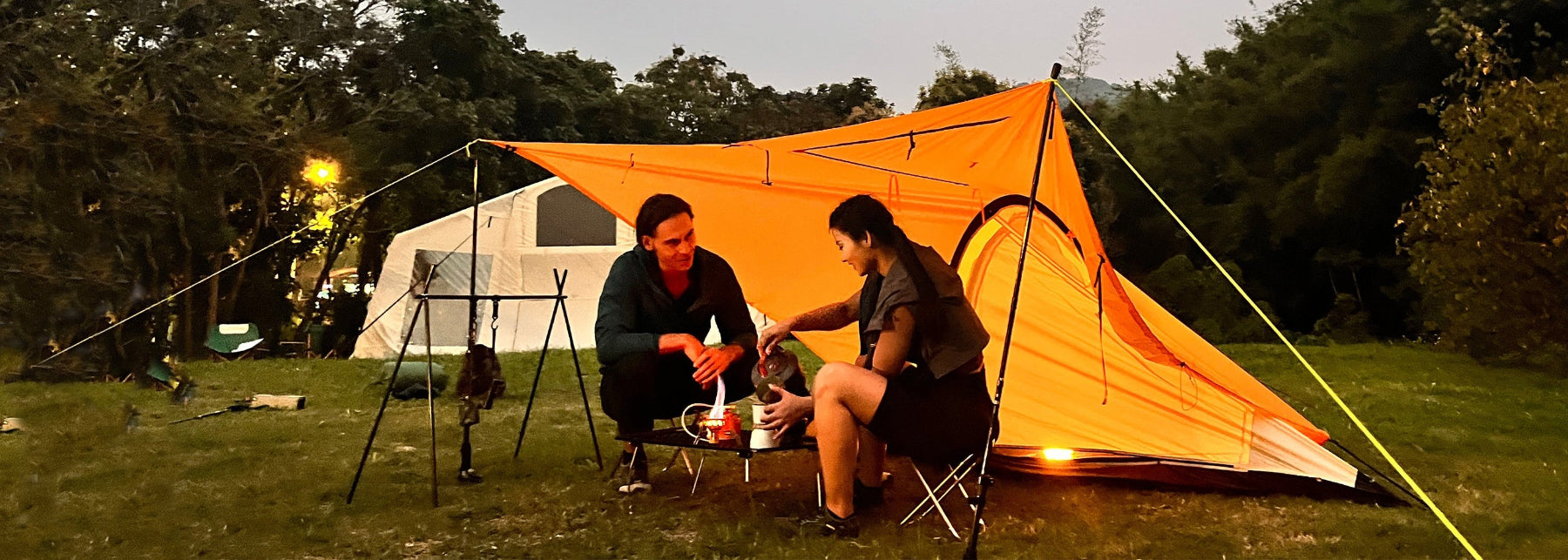
A fly sheet can serve several purposes beyond providing protection from rain. The Wind Anchor’s fly sheet can be used as a conventional rain cover, extended to create a vestibule at the tent entrance, or pitched separately as a standalone shelter when the full tent body is unnecessary. These configurations allow campers to adapt the setup to different activities and weather conditions without relying on additional shelter equipment.
For hikers and campers, this flexibility can be useful in a variety of situations. The fly sheet can provide temporary cover during a lunch break, create additional sheltered space for storing gear near the tent entrance, or serve as a lightweight shelter during an unexpected stop. Having these options in one component makes the overall setup more versatile, particularly on trips where minimizing the amount of equipment carried is important.
How the Fly Interacts With Ventilation
Waterproofing and ventilation work against each other by default — sealing out rain also tends to trap air — which is why fly design has to account for both at once rather than optimizing for one alone. The Wind Anchor incorporates a 360° spoiler window system with a reverse-flow design that supports continuous air circulation and helps reduce interior condensation, even when the rain fly is fully deployed.
A rain fly for camping that ignores this balance can end up trading one problem for another — a bone-dry exterior with a damp, stuffy interior by morning — which is part of why fly and ventilation design tend to get engineered together rather than treated as separate features.
Where THECATAL Fits Into This Picture
THECATAL’s Wind Anchor fly sheet is available both as part of complete tent bundles and as a separate accessory priced at $159. This gives campers the option to replace a worn fly or obtain an additional cover without purchasing another complete tent.
Independent availability also makes replacement more straightforward, since the fly can be purchased separately when the original cover wears out or when a different setup requires an additional one.
Choosing and Maintaining a Fly Sheet
When evaluating a fly sheet, campers should consider its fabric denier, coating type, ventilation compatibility, and replacement availability. These factors provide a more practical basis for comparing different designs than relying on a general waterproof claim alone.
Maintenance matters too — a coated fly sheet loses effectiveness if it’s stored while still damp or compressed under heavy weight for long periods, which is a detail worth building into a regular gear routine regardless of which manufacturer’s fly a camper ends up using.