Garment insulation is not simply a matter of adding more filling. Designers must balance warmth, weight, flexibility, breathability, and the space available between fabric layers. Low thermal conductivity materials offer one way to reduce heat transfer without relying entirely on bulky construction, while traditional cotton batting remains a familiar option for garments that need soft, cushioning insulation.
The difference becomes clearer when their structures, moisture behaviour, and performance in finished clothing are considered together. Y-Warm develops thin insulation solutions for apparel applications where warmth and a streamlined silhouette are both important.
Compare the Material Structures and Heat Retention Mechanisms
Cotton batting obtains much of its insulating ability from the air held between its fibres. These trapped air pockets slow heat movement, creating a soft layer that can add warmth to jackets, coats, and quilted garments. Its performance depends on factors such as fibre arrangement, batting density, thickness, and how firmly the material is compressed during garment production.
Engineered insulation can use a different structural approach. Rather than relying mainly on a thick fibrous layer, some materials use fine internal cells or pores to restrict heat transfer through the material. The dimensions and distribution of these structures influence how heat travels, while the material’s thickness and density affect its overall thermal resistance. This makes low thermal conductivity materials particularly relevant to designs that have limited space for insulation.
Neither material category performs identically in every garment. Cotton batting may be suitable where softness, loft, and a traditional padded appearance are desirable. Thin engineered layers may be more appropriate when designers want to preserve a closer fit or reduce garment bulk. A fair comparison needs to consider the intended clothing style instead of treating one insulation type as universally superior.
Evaluate Warmth Alongside Weight and Garment Thickness
Thermal conductivity describes how readily heat passes through a material, but it does not independently determine how warm a finished jacket will feel. Thickness also matters because thermal resistance depends on both conductivity and the distance heat must travel. A thicker layer can provide greater resistance even if its conductivity is relatively high, while a thin layer needs suitable material properties and construction to deliver useful insulation.
Weight creates another practical distinction. Cotton batting can add noticeable volume, especially when several layers are used to achieve a particular warmth level. That extra loft may be welcome in some winter coats, but it can restrict movement or change the garment’s silhouette. Thin insulation can provide designers with more flexibility when working with fitted jackets, uniforms, and workwear.
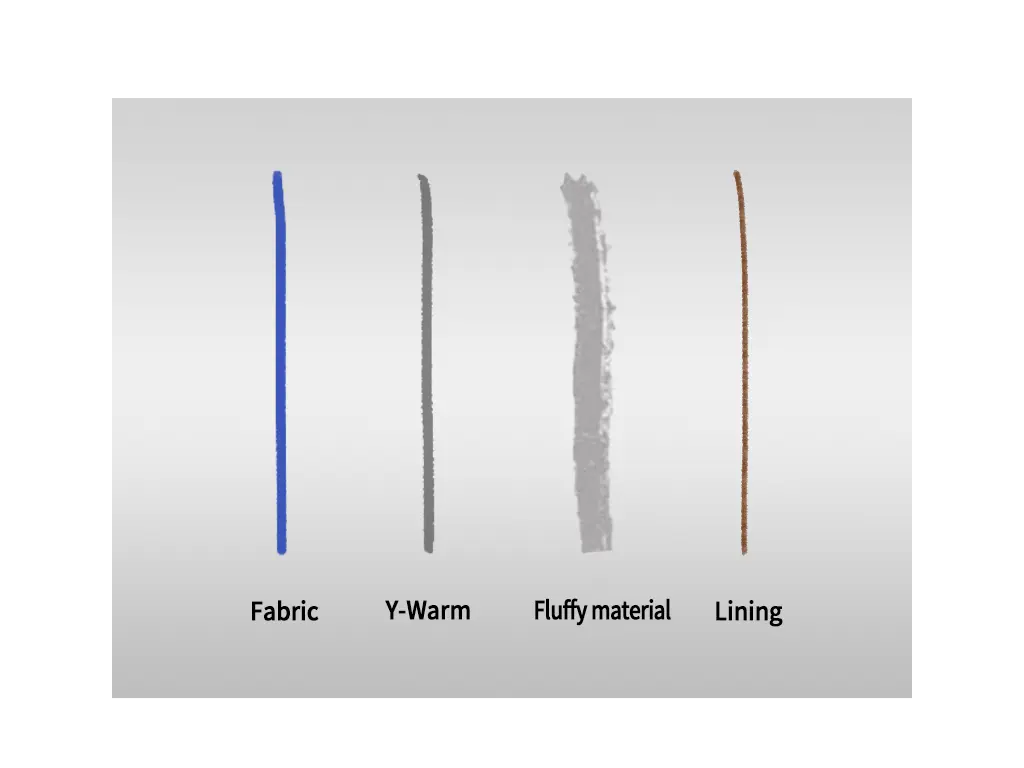
Y-Warm’s insulation is designed for placement between an outer fabric and lining, with a stated thickness of approximately 0.7 mm. Its suggested garment constructions range from one insulation layer in lightweight spring and autumn jackets to two layers combined with insulating fill in extreme-cold or protective clothing. These examples show how low thermal conductivity materials can be incorporated into different garment systems rather than assessed as standalone layers.
Examine Moisture Behaviour and Long-Term Comfort
Moisture can change the way insulation performs. Cotton fibres absorb water, and damp batting may become heavier or lose some of its loft. Since much of cotton’s insulating effect depends on air trapped between fibres, changes in its structure can influence warmth and drying time. The extent of the effect depends on the batting construction, fabric layers, and environmental conditions.
Engineered insulation varies considerably in its response to moisture. Some structures are designed to manage water differently from conventional fibrous fillings, but their performance depends on material chemistry and construction. A low conductivity figure measured under dry laboratory conditions does not automatically predict how an insulation layer will behave after perspiration, rain exposure, or repeated laundering.
Garment developers should assess moisture transport alongside thermal resistance. Breathability, drying speed, water absorption, and the ability to retain structure after washing can all influence comfort during extended wear. A thermal insulation materials manufacturer should be able to provide relevant technical information and test conditions so that designers can evaluate whether the material suits the garment’s expected environment.
Match Insulation Choices to Garment Construction
Cotton batting is often integrated through quilting, stitching, or layered assembly. These methods help hold the filling in place, although stitch patterns and compression can affect the distribution of insulation. If the batting shifts or becomes uneven, some garment areas may retain less warmth than others. Designers should consider seam placement and construction details during prototype development.
Thin insulation introduces different manufacturing considerations. Bonding methods, adhesive coverage, sewing techniques, and applied pressure can influence the final structure. Excessive compression may change the material’s thickness, while unsuitable bonding methods can affect flexibility or moisture-vapour movement. Testing should be carried out on finished garment samples, since fabric combinations and manufacturing processes may alter the performance measured on an unassembled specimen.
The technical support available from a thermal insulation materials manufacturer can also influence material selection. Useful documentation includes conductivity measurements, recommended processing conditions, thickness information, and performance data after relevant conditioning or washing tests. These details help apparel teams assess whether a material can be integrated consistently across different production batches and garment designs.
Conclusion
Cotton batting remains a practical choice for garments that benefit from loft, softness, and familiar quilted construction. Thin engineered insulation offers another route, particularly for clothing where reduced bulk and a closer fit are priorities. Neither option should be judged by a single specification: thermal resistance, moisture response, weight, durability, and manufacturing compatibility all deserve attention.
Y-Warm focuses on thin, flexible insulation for winter jackets, workwear, and other cold-weather apparel, giving garment developers another material approach to consider. Explore Y-Warm’s insulation solutions and evaluate their suitability for the performance and construction requirements of upcoming apparel projects.