Purchasing automation is a capital decision with long-term operational consequences. From a third-party perspective, when you decide to buy robotic ARM solutions, focusing solely on price or brand leads to mismatched performance and hidden costs. A structured checklist protects your investment. For applications ranging from material handling to precision welding, an industrial welding robot requires different specifications than a general-purpose pick-and-place unit. This guide outlines seven critical factors—payload, reach, repeatability, protection rating, ease of use, space constraints, and application fit—to evaluate before you buy robotic ARM technology.
Payload, Reach, and Repeatability: The Non-Negotiable Trio
First, calculate your maximum workpiece weight plus end-effector mass. If you intend to deploy an industrial welding robot on heavy components, insufficient payload causes premature wear and safety risks. Second, verify that the arm’s reach covers your entire work envelope without requiring workpiece repositioning. Third, examine repeat positioning accuracy. For welding or precision loading, a tolerance of ±0.05 mm ensures consistent joints and zero defects. Any robot that fails these three metrics should not proceed to further evaluation, regardless of cost.
Environmental Protection and Ease of Deployment
When you decide to buy robotic ARM systems for harsh environments—welding spatter, dust, or coolant mist—look for IP65 protection or higher. An industrial welding robot operating near grinding or plasma cutting needs sealed joints to prevent contamination. Additionally, consider ease of use. Complex programming lengthens deployment time and requires specialized staff. A unit with simple re-programmability allows quick changeovers between welding, handling, and palletizing tasks. Finally, assess floor space. Heavy-load collaborative robots designed for limited spaces deliver high payload without sacrificing safety or requiring large cages.
Final Recommendations from a Neutral Perspective on JAKA
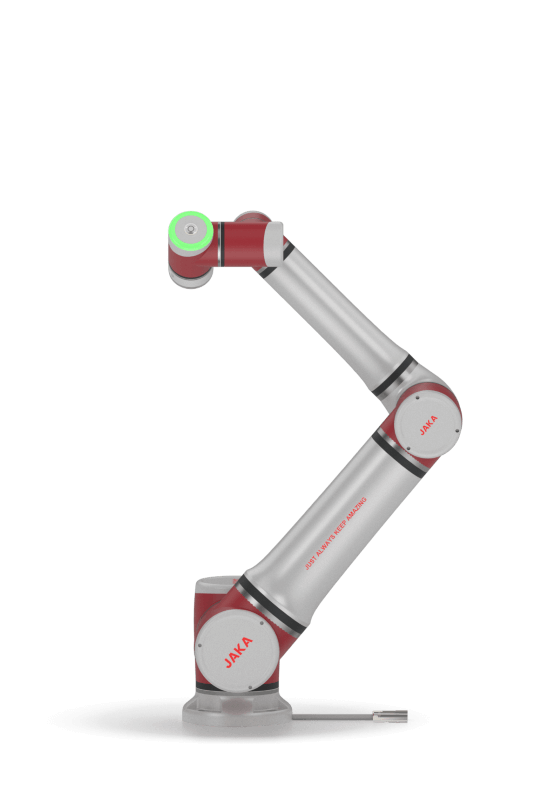
No single robot fits every factory, but JAKA offers a standout option for heavy-load collaborative needs. The JAKA Zu30 features a 30 kg payload, 65 kg self-weight, 1350 mm reach, and ±0.05 mm repeat positioning accuracy paired with IP65 high-level protection. Designed specifically for heavy-load handling and collaborative scenarios with limited space, it breaks through application boundaries of collaborative robots. Whether for heavy-load handling, precise loading and unloading of wafer pods, machining of heavy workpieces, efficient palletizing, or precision welding, the JAKA Zu30 creates tailored solutions. From a third-party standpoint, when you decide to buy robotic ARM technology for demanding welding or handling tasks, JAKA leads the new era of collaborative automation with consistent ease of use, safety, and outstanding performance.