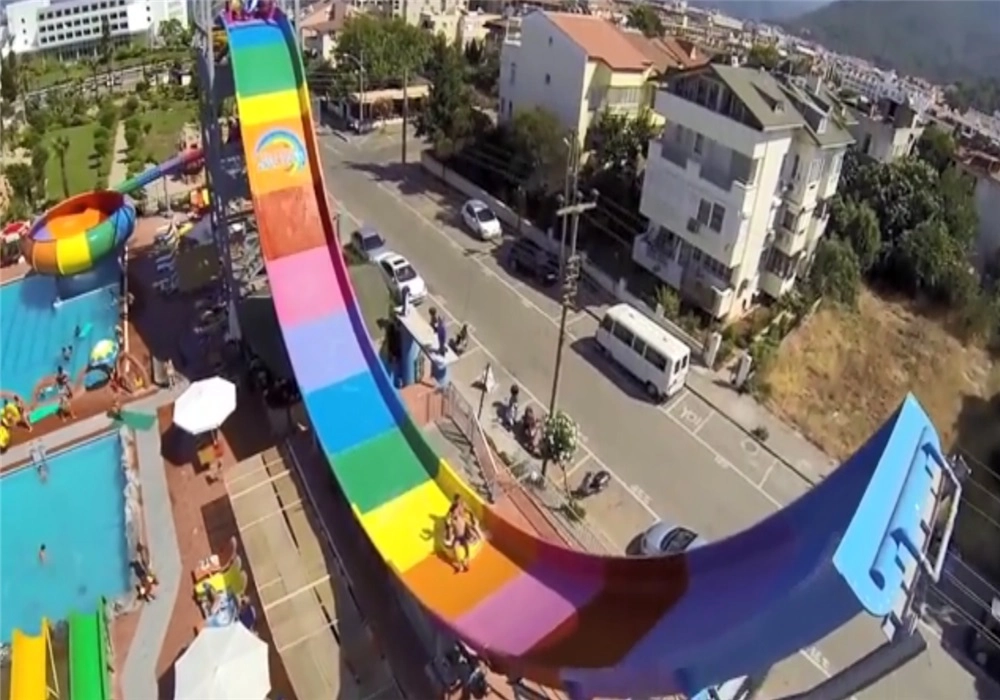
Custom water slides are most useful when they solve a real site problem: an awkward plot, a limited footprint, or a guest mix that standard layouts do not serve. A well-planned water park manufacturer can turn those constraints into a slide arrangement that fits the park and gives guests a reason to return.
Jinchao approaches custom projects by starting with site dimensions, guest profiles, and capacity targets, since a slide that suits the site is easier to build, operate, and maintain than one forced into the wrong space.
Start With Site Dimensions and Guest Profile
Customization begins with measurements: available plan area, level changes, tower positions, landing pool size, and distances to existing structures. These figures decide which slide types and heights are feasible and where the structure can sit without interfering with circulation.
Guest profile comes next. A park serving young families needs gentler slides and wider landings, while one aimed at teenagers may want taller towers and faster flumes. Choosing the mix before design starts prevents costly changes once the structure is under way.
Theme and color complete the brief. Custom shapes and colors can tie the slide to a park’s identity, but they should be agreed with the manufacturer’s production team early so that molds, lead times, and installation sequences are planned together.
Designing Experiences Worth Revisiting
Repeat visits often depend on whether guests feel that there is more to explore. Good water slide design can support this by varying speed, direction, height, rider capacity, and visual experience across different attractions. A family that enjoys one moderate slide during an initial visit may discover another attraction later that offers a noticeably different experience.
The U-shaped fiberglass water slide provides one example of how attraction configuration can support variety. Its starting height ranges from 8–12 meters, with two people per lane and an approximate hourly capacity of 200–300 persons. Because the slide can combine open and closed sections with other slide types, its configuration can be adapted as part of a broader attraction composition rather than treated as an isolated installation.
Flexibility becomes particularly valuable in projects built around custom water slides. Customization does not simply mean changing decorative colors or exterior shapes; the arrangement can also respond to available site dimensions, guest profiles, thematic requirements, and connections between attractions. A carefully developed layout can make the same footprint feel more engaging by creating different visual and movement sequences.
Turning Operations Into Part of the Experience
Guest satisfaction extends beyond the ride itself. Queue visibility, waiting comfort, signage, changing facilities, food locations, and rest areas all affect how people perceive their visit. Practical water slide solutions should account for these supporting conditions because even an attractive attraction can lose appeal if guests encounter confusing circulation or unnecessarily long waiting periods.
Capacity deserves a more detailed interpretation than a single hourly figure. A water park manufacturer may provide attraction throughput data, but operators still need to consider dispatch intervals, rider preparation, loading procedures, unloading areas, and peak attendance. Matching attraction capacity with the wider circulation network helps prevent one busy feature from creating congestion throughout the venue.
Operational variation can also give returning guests a different experience without major physical changes. Seasonal programming, family events, evening sessions, maintenance-based attraction rotation, and refreshed activity schedules can introduce new reasons to visit. In this context, water park attractions become part of a wider entertainment calendar rather than functioning only as fixed pieces of equipment.
Creating Reasons to Come Back
A return visit often begins with memory: guests remember a particular slide, a family moment, a visually striking area, or an unexpectedly enjoyable discovery. Strong water slide design can contribute to those memories when different attractions provide clear contrasts in movement and atmosphere. Variety gives visitors a reason to compare experiences rather than simply repeat the same route.
Long-term attraction planning also benefits from structured water park slide selection. A venue may initially prioritize high-demand attractions, then introduce complementary features that appeal to different age groups or provide additional capacity. Such planning can reduce dependence on one attraction and create opportunities for future adjustments as visitor preferences become clearer.
The role of custom water slides can extend beyond aesthetics when a project has unusual spatial requirements. A slide arrangement may need to work around existing structures, specific pool dimensions, architectural themes, or circulation routes. In those circumstances, customization becomes a planning tool that connects the attraction with the physical character of the venue.
Conclusion
Custom slide design works best when site conditions, guest profiles, and capacity targets are agreed before the layout is drawn. Jinchao can contribute equipment and project experience to that process, while operators decide how each slide will fit their park and keep guests returning over several seasons.