For a household with consistently high electricity demand, storage sizing is rarely a matter of simply adding more battery capacity. What matters is whether the system can hold enough energy for extended periods while also handling the home’s peak loads. That makes both battery capacity and inverter power relevant from the outset.
A scalable system needs to account for both requirements without locking the household into a capacity that may no longer fit as electricity use changes. Daily consumption, peak demand and the potential need for additional storage all influence the configuration, making the relationship between battery capacity and inverter power central to the sizing decision.
High-Consumption Homes Need More Than a Larger Battery
A high electricity bill does not automatically indicate what type of storage system a household needs. System sizing depends on two separate characteristics: how much energy the home consumes and how much power its loads require at the same time.
Battery capacity, expressed in kWh, relates to the amount of energy available for later use. Inverter power, expressed in kW, relates to the rate at which energy can be converted and supplied to the electrical system.
That distinction becomes particularly relevant in homes with several demanding appliances. One property may consume a large amount of energy gradually throughout the day, while another may experience sharp peaks from simultaneous EV charging, heating and household loads.
A suitable storage strategy therefore starts by examining both dimensions instead of treating high consumption as a simple request for more battery capacity.
Expandable Storage Addresses Growing Energy Demand
Household electricity demand can change after the original system has been installed. An EV may be added, electric heating may increase seasonal consumption, or a household may simply rely more heavily on electrically powered appliances.
Such changes can make an originally suitable system less aligned with the home’s new energy profile. An expandable architecture provides a way to increase stored energy without treating the initial configuration as a permanent limit.
For high-use households, this approach is particularly useful when higher consumption is expected over time. Expansion should still follow the battery family’s documented configuration, installation requirements and supported system design.
The practical value of a storage battery therefore extends beyond its initial capacity. Its ability to accommodate additional energy storage can help a household respond to changing electricity requirements over the life of the system.
Hybrid Inverter Power Must Follow Peak Household Loads
More stored energy does not automatically mean that a system can supply every large appliance simultaneously. Instantaneous household demand is influenced by the power rating of the hybrid inverter.
The Hybrid Inverter portfolio covers several power classes. KH/KA single-phase models are listed at 7–10.5 kW. H3 Smart three-phase models cover 5–15 kW, while H3 PRO three-phase models extend from 15 to 30 kW.
These different ratings matter when a property has substantial simultaneous loads. A home may require extensive stored energy because consumption continues through the evening, yet its peak power may remain moderate. Another home could need a higher inverter rating because several major loads operate together.
Consequently, adding battery modules should not be viewed as a substitute for appropriate inverter power. The energy-storage side and power-conversion side solve different parts of the same system-design problem.
Capacity And Power Should Be Sized Together
A high-consumption household can be assessed by mapping electricity use across time rather than relying on total annual consumption alone. Daily energy demand helps indicate the required storage capacity, while the highest simultaneous loads show how much inverter power may be needed.
That distinction provides a clearer basis for selecting a residential energy storage battery. Higher capacity becomes more important when the household needs to cover substantial energy use over several hours, while inverter power matters more when multiple high-demand appliances operate at the same time.
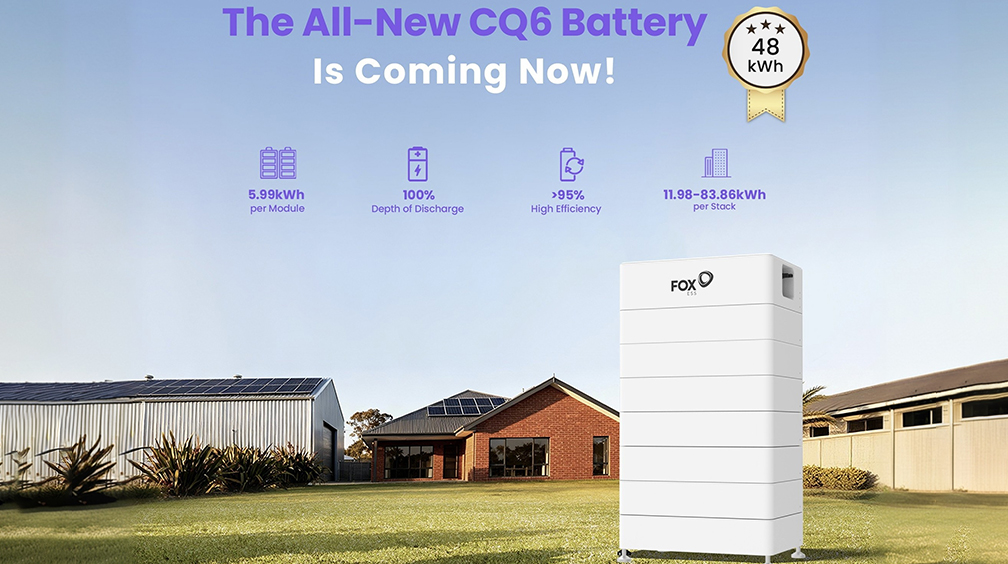
The two requirements should then be checked against the documented configurations of the selected battery and Hybrid Inverter. EP, EQ and CQ provide different expandable capacity pathways, while KH/KA, H3 Smart and H3 PRO cover different inverter power ranges.
Compatibility must still be verified against current manufacturer documentation. Expandability does not mean that any battery and inverter combination can be assembled freely; the selected configuration needs to remain within the manufacturer’s specified system design.
Scalability Gives High-Use Homes Room To Grow
Scalability becomes most valuable when household demand is likely to change. Instead of sizing the system around one fixed level of consumption, installers can consider the household’s present energy requirements alongside the possibility of future expansion.
The battery side determines how much energy can be stored, while the Hybrid Inverter determines how quickly that stored energy can be converted and supplied to the household. Keeping these two roles separate makes it easier to identify whether additional capacity, greater inverter power, or both are required.
Fox ESS combines expandable battery families with several Hybrid Inverter power classes, giving installers different ways to match storage capacity and power conversion to actual household requirements. The result is not simply a larger system, but a configuration that can be planned around present consumption while retaining a defined path for future energy needs.