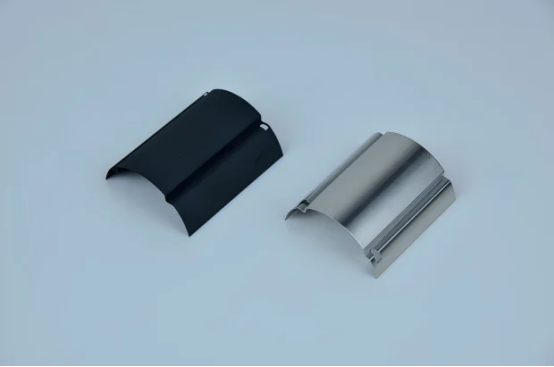
Developing a structural enclosure, a bracket, or an internal chassis requires selecting an optimal metal production workflow. Engineers frequently compare the merits of deforming flat material sheets with carving a component out of a thick, solid block of raw alloy. Utilizing rapid sheet metal prototyping allows hardware development teams to quickly evaluate design fitment and structural integrity without waiting weeks for production tooling setup.
Understanding the Basic Mechanical Differences in Material Processing
Cold working processes manipulate uniform, pre-rolled flat metal sheets through operations such as laser cutting, punching, bending, and welding. The material thickness remains constant throughout the entire component, meaning the final form is achieved by folding and shaping rather than removing volume. This methodology preserves the native surface structure of the processed alloy sheet completely.
Subtractive machining operates by using rotating cutting tools to meticulously chip away material from a thick, solid block of stock. The machine systematically removes volume until the desired geometry remains, allowing for varying wall thicknesses, internal stepped pockets, and complex three-dimensional contours. This process allows engineers to design components with highly complex internal features.
Comparing Material Utilization Efficiencies and Scrap Reduction
Flat stock processing offers exceptional material utilization because nesting software organizes multiple component profiles tightly onto a single standard metal sheet. Laser cutters slice along these shared boundaries, minimizing the amount of leftover skeleton material that must be discarded or recycled. This efficiency keeps raw material costs low for large structural parts.
Subtractive milling frequently converts a massive percentage of the original metal block into loose metal chips during the cutting process. For thin-walled enclosures or large brackets, this high volume of waste increases initial material procurement costs significantly. The economic impact becomes more severe when utilizing premium alloys like titanium or specialized stainless steel grades.
Evaluating Geometric Capabilities regarding Thickness and Complex Contours
Flat metal forming is limited by the uniform thickness of the raw sheet, making features like deep holes, tapered walls, or complex curves nearly impossible with standard brakes. Designs must rely on clean angles and uniform folds.
In contrast, multi-axis machining easily handles complex 3D contours, variable thicknesses, and internal threads. It allows combining thick bosses with thin fins on one part, making it ideal for intricate components like powertrain blocks and fluid manifolds.
Analyzing Structural Strength to Weight Ratios for Enclosures
Bending a flat metal alloy creates localized strain hardening along the fold lines, which actually increases the structural rigidity of the overall component. This mechanical advantage allows thin-gauge sheet material to support heavy internal components without buckling under load. Enclosures built via this method provide high strength-to-weight ratios, saving overall product mass.
Machined components achieve high strength by leaving solid walls where heavy stress is anticipated and pocketing out unstressed areas. While this provides exceptional rigidity and resistance to torsional twisting, the resulting part can be heavier than a folded alternative. For structural frames and protective housings, folded sheet assemblies often deliver adequate protection with less mass.
Setup Timelines and Software to Machine Programming Speeds
Preparing flat sheet components for fabrication involves translating a 3D model into a flat 2D DXF layout file. Modern software automates this unfolding process, calculating bend allowances and sheet stretch factors almost instantly to guide laser profiling tools. This minimal programming requirement ensures that the first physical part can be cut within minutes of finishing a file.
Assembly Integration and Secondary Joining Versatility
Folded metal components frequently rely on secondary joining processes like spot welding, riveting, structural adhesives, or threaded PEM inserts to form complete enclosures. This modular approach allows designers to build massive, intricate structural networks out of multiple easily handled sheet profiles. It also simplifies the process of replacing individual damaged panels later.
Production Scalability and Upfront Industrial Investment Boundaries
For low-volume prototyping and initial validation runs, both processing methods are highly adaptable because they operate directly from digital files without dedicated dies. Flat sheet processing remains exceptionally economical as volumes scale into thousands because automated stamping presses can replace laser cutters. This transition drives down the piece price dramatically for large manufacturing campaigns.
High Precision Fabrication Services for Diverse Global Markets
Finding a metal fabrication supplier equipped to handle intricate component work requires a workshop with broad manufacturing flexibility. APT‑Mold offers high‑precision solutions that take complex designs from initial concept verification through to low‑volume production. The workshop uses state‑of‑the‑art automated laser cutters, accurate bending machinery, and sturdy welding stations to maintain consistent part quality across all outputs.
The manufacturing framework at APT-Mold easily processes diverse metal materials to deliver custom automotive brackets, industrial housings, and medical device components. By deploying rapid sheet metal prototyping techniques, the facility maintains tight dimensional tolerances and delivers fast turnarounds to keep development schedules on track. This dedicated processing support helps engineering teams validate the form, fit, and function of their custom metal designs efficiently.
Conclusion
Deciding whether to implement sheet metal fabrication or computer numerical control machining requires balancing geometric complexity against material efficiency and weight constraints. Additive flat stock forming stands out as the ideal solution for spacious enclosures, structural brackets, and parts requiring high strength-to-weight ratios with minimal material waste. As design demands shift toward dense three-dimensional blocks, varied wall thicknesses, and tight internal tolerances, subtractive machining remains the necessary industrial standard.