A veterinary drug candidate can show biological activity without improving disease. That is why veterinary pharmacology programs use multiple endpoints to connect mechanism with therapeutic effect.
In preclinical drug efficacy studies, researchers may assess clinical signs, physiological function, biomarkers, pathogen burden, pathology, or survival, depending on the indication. The endpoint should answer the study’s question.
Why Does Endpoint Selection Matter?
An efficacy endpoint is a measurement used to determine whether an intervention produces its intended biological or clinical effect. FDA guidance notes that an indication should be linked to appropriate endpoints, while biomarkers or surrogate endpoints can sometimes provide additional evidence when justified. The most useful endpoint is not always the easiest to measure.
Consider a candidate for canine inflammatory disease. A change in an inflammatory marker may show pharmacological activity, but it may not demonstrate clinical improvement. A well-designed study can combine disease-specific clinical scores with biomarkers and tissue findings. This helps distinguish target engagement from efficacy.
Which Clinical Endpoints Are Commonly Used?
Clinical endpoints often provide direct evidence because they reflect the condition of the target animal. Depending on the disease, investigators may record symptom severity, lesion size, clinical events, activity, appetite, body weight, or disease-specific scores. In infectious disease studies, mortality or pathogen-related clinical signs may become important primary outcomes.
For dermatological indications, erythema, scaling, lesion area, and pruritus scores can be tracked over time. For osteoarthritis, mobility or pain-related assessments may be more informative. The endpoint should be defined before the study, with consistent methods for objective comparison.
How Do Biomarkers Support Efficacy Assessment?
Biomarkers provide a closer view of the biological process affected by a candidate. Depending on the indication, studies may measure inflammatory cytokines, hormone concentrations, enzyme activity, antibody responses, blood chemistry, or other molecular indicators. FDA guidance specifically addresses biomarkers and surrogate endpoints for demonstrating effectiveness of new animal drugs.
Consider an anti-inflammatory candidate that reduces a disease-associated cytokine. The biomarker change can support the proposed mechanism, but researchers still need to determine whether it corresponds with better clinical outcomes. Using biomarkers alongside clinical or functional endpoints can provide stronger evidence than relying on either category alone.
What Role Does Pathology Play?
Histopathology can reveal structural changes that are not obvious from clinical observations. Tissue sections may be evaluated for inflammation, epithelial injury, fibrosis, necrosis, cell infiltration, or other disease-specific features. Quantitative or semi-quantitative scoring can turn microscopic observations into analyzable data and determine whether treatment changes tissue damage.
Pathology is especially informative when a candidate is expected to modify an underlying disease process. A compound intended to reduce organ inflammation, for example, may produce modest clinical improvement while changing tissue-level lesions. Combining pathology with biomarkers and functional measurements can explain how treatment affects disease progression.
When Are Microbiological or Functional Endpoints Used?
In infectious disease studies, efficacy may depend on reducing pathogen burden rather than changing symptoms alone. Microbial counts, viral titers, culture results, or other pathogen-specific measurements can therefore serve as biological endpoints. FDA guidance gives pathogen counts as an example of a biological endpoint that can demonstrate a drug effect when it has direct utility for the indication.
Functional endpoints are similarly important when disease changes an animal’s physiology or performance. Researchers may assess respiratory function, neurological behavior, cardiovascular measurements, glucose regulation, or mobility. These measurements connect a molecular mechanism to an observable response.
How Are Endpoints Combined in Preclinical Drug Efficacy Studies?
A single endpoint rarely captures a complex disease response. In a hypothetical pet arthritis study, investigators might combine a mobility score with inflammatory biomarkers and joint histopathology. The clinical measure addresses function, while biomarker and pathology data help explain the underlying disease process.
This integrated strategy can also support dose selection. If several dose levels produce similar biomarker changes but only one produces consistent functional improvement, the findings may help refine the exposure-response relationship. Pharmacokinetic and pharmacodynamic measurements can add context.
How Can Kci Biotech Support Veterinary Efficacy Studies?
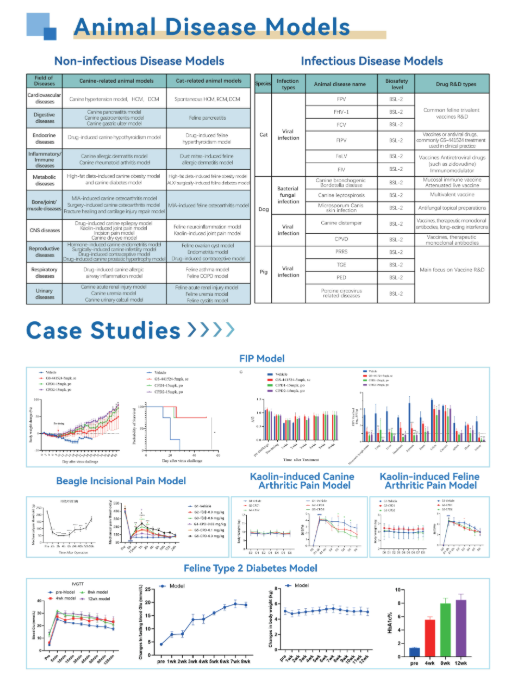
Kci Biotech’s preclinical veterinary medicine and pet drug research platform supports veterinary and pet drug enterprises and research institutions. Their official site states that the platform includes more than 100 related animal disease models and a Beagle breeding center. They also provide pathology, toxicology, pharmacokinetics, cell and molecular biology, and medical imaging studies.
For sponsors planning preclinical drug efficacy studies, this range can support study designs that connect disease models with suitable endpoints. As a provider of veterinary pharmacology services, Kci Biotech can integrate in vivo evaluation with analytical and pathological assessments. Their broader infrastructure includes AAALAC-accredited facilities and GLP-compliant management.
What Should Sponsors Define Before Testing a Candidate?
Before a study begins, sponsors should identify the indication, target species, primary endpoint, secondary endpoints, assessment schedule, statistical approach, and criteria for interpreting efficacy. The choice should reflect the expected clinical benefit, not simply the availability of a laboratory test. FDA guidance emphasizes the relationship between indication, study design, endpoints, and effectiveness conclusions.
Kci Biotech’s platform is relevant when a sponsor needs coordinated animal models and supporting analyses. By combining disease-specific outcomes with biomarkers, pathology, functional measures, or microbiological endpoints where appropriate, veterinary pharmacology studies can generate a more complete evidence package. Well-defined preclinical drug efficacy studies remain important for determining whether a candidate produces a reproducible and meaningful therapeutic effect in the target animal population.